An Italian trial on 225 patients shows the contribution of Serenoa repens and Cucurbita pepo to minoxidil and finasteride
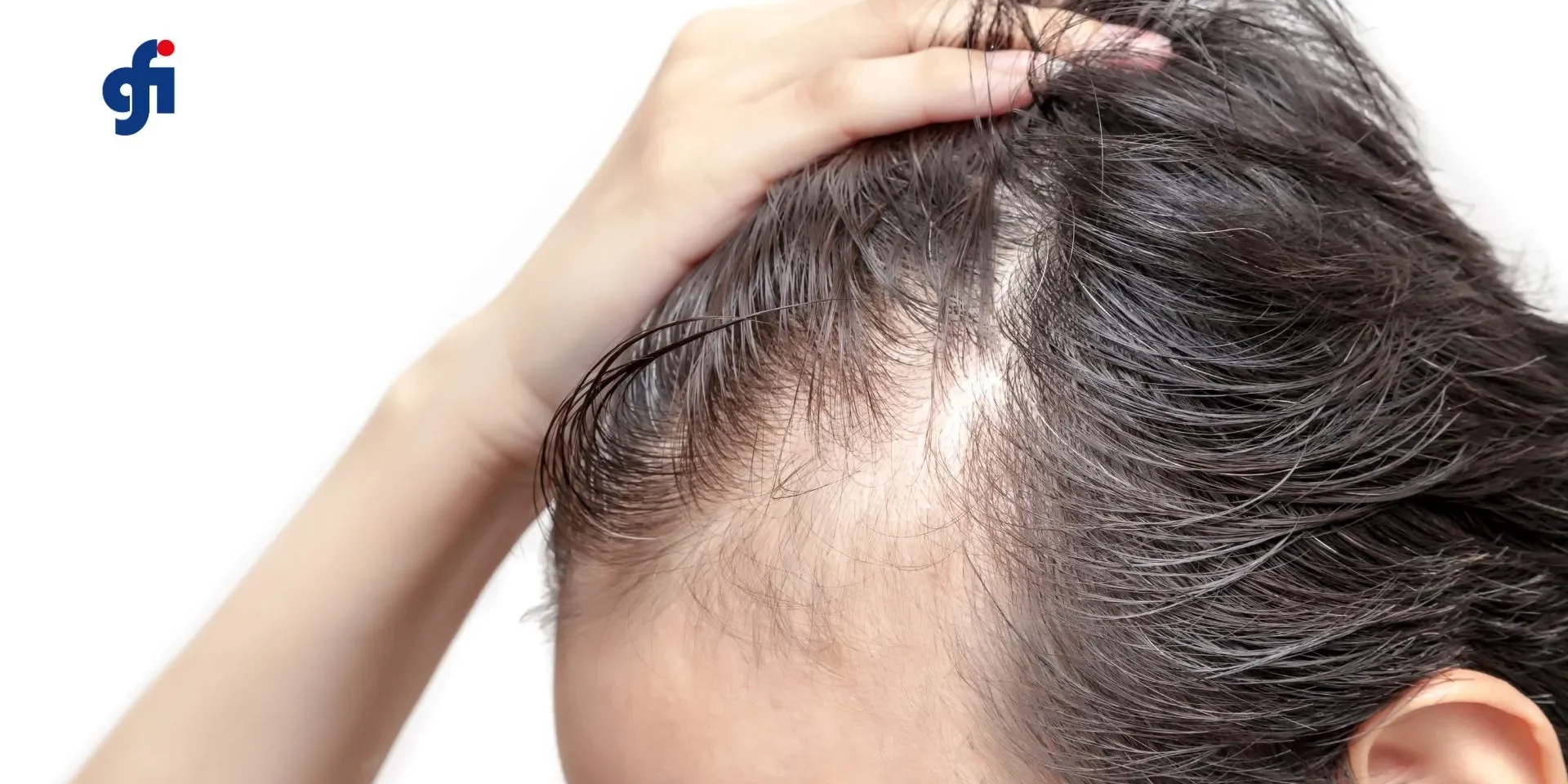
Anyone who treats patients with androgenetic alopecia knows the most uncomfortable limitation of minoxidil and finasteride well: in daily practice, a substantial clinical response occurs in fewer than one in five patients over the medium term. This is a reality dermatologists face every day in clinical practice, and one that has long prompted research to ask whether targeted nutritional support could change the picture.
An answer comes from a multicenter trial conducted at thirteen Italian dermatology centers, with a pragmatic design closer to real-world clinical practice than to the laboratory. The study evaluated a supplement for androgenetic alopecia based on Serenoa repens, Cucurbita pepo, L-cystine and vitamin C, administered alongside standard drug treatments in 225 subjects.
The limits of approved treatments for AGA and FAGA
Minoxidil topical and oral finasteride remain, to date, the only approved drug therapies for male (AGA) and female (FAGA) androgenetic alopecia. Their mechanism of action is well established: they act on the follicle’s microcirculation or on the conversion of testosterone into dihydrotestosterone, the main driver of follicular miniaturization. However, a marked clinical benefit is seen only in a minority of patients, and it is precisely this gap between theoretical drug efficacy and perceived outcomes that motivated the study.
Why might a supplement enhance the action of minoxidil and finasteride in androgenetic alopecia? The authors’ hypothesis is that, by acting on complementary biological targets, from DHT to keratin synthesis, targeted nutritional support could amplify the effect of standard drug therapy, without replacing it.
Study design: a real-life trial on 225 patients
The study, published in the Journal of Cosmetic Dermatology, enrolled 225 subjects, 165 men and 60 women with an average age of 40, followed for six months across 13 Italian dermatology clinics between March 2024 and April 2025. Participants were randomized into two groups: 106 received their usual drug treatment, minoxidil or finasteride in most cases, plus one daily capsule of the supplement; 119 continued with drug therapy alone.
The tested formulation combines Serenoa repens (320 mg), Cucurbita pepo (320 mg), L-cystine (425 mg), vitamin C and zinc. The primary outcome, the degree of improvement at six months, was assessed by an evaluator blinded to treatment assignment, based on standardized scalp photographs.
Clinical results at six months
At six months, the difference between the two groups was measurable and statistically significant. The main findings of the study:
- Marked improvement: 36.5% of patients in the supplement group reached the maximum score on the rating scale, compared with 24% in the drug-only group
- Subjective perception of major improvement: 46% versus 30%, in favor of the supplemented group
- No dropouts among the 225 enrolled subjects, with a tolerability profile described by the authors as favorable
The mean overall clinical improvement score at six months was higher in the supplement group, although it did not on its own reach the threshold of statistical significance; a signal consistent with the result on the primary endpoint, rather than a standalone finding.
The mechanism of action of Serenoa repens and Cucurbita pepo
The four components of the supplement act on distinct but complementary biological targets. Serenoa repens is a natural inhibitor of 5-alpha-reductase, the enzyme that converts testosterone into DHT; its action runs alongside, without overlapping, that of finasteride. Cucurbita pepo, pumpkin seed extract, is rich in phytosterols, to which the literature attributes a role in counteracting the effects of DHT on the hair follicle.
L-cystine is a sulfur-containing amino acid essential for keratin synthesis, the main structural component of hair; an adequate intake can help strengthen the hair shaft and improve its perceived quality. Vitamin C, finally, acts as an antioxidant and supports collagen synthesis, with a possible contribution to overall scalp health.
The role of the androgenetic alopecia supplement in nutraceutical formulation
Beyond the individual clinical result, the study offers useful guidance for those developing hair health products. The combination of a natural 5-alpha-reductase inhibitor, phytosterols, sulfur-containing amino acids and antioxidant cofactors appears to address several pathogenic mechanisms of androgenetic alopecia at once: a multi-target approach that is difficult to achieve with a single active ingredient.
The authors themselves point out some limitations of the study: the primary endpoint is based on a visual assessment rather than an objective trichological count, the trial is not double-blind, and a substantial proportion of patients, about 40% in both groups, used personalized compounded formulations; a feature typical of Italian dermatology practice, but balanced between the two study arms. There is therefore room for future research on larger samples and with quantitative endpoints, but the direction indicated by the data supports a concrete role for oral supplementation as an adjunct to drug treatments for androgenetic alopecia.
If your company is interested in developing formulations based on Serenoa repens, Cucurbita pepo and L-cystine
Source
Milani M., Alfano S., The AGA-P Real-Life Study Group, “Impact of a Novel Dietary Supplement on Efficacy of Pharmacological Treatments for Androgenic Alopecia: A Real-Life, Multicenter, Randomized, Assessor-Blinded Trial on 225 Subjects”, Journal of Cosmetic Dermatology, 2025;24:e70388. DOI: DOI: https://doi.org/10.1111/jocd.70388