
A clinical study on patients with fatty liver disease reveals how the alkaloid acts on VEGF and blood pressure
There’s a plant that researchers struggle to fit into a single category. It acts on blood sugar, on fats, on inflammation, and now it seems to be talking to blood vessels too.
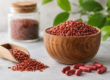
It’s called berberine, an alkaloid extracted from plants such as Berberis vulgaris and Coptis chinensis, already known for its impact on metabolism. A new study published in Nutrients has shone a light on a less explored front: the link between berberine, VEGF (vascular endothelial growth factor) and vascular health in people living with metabolic fatty liver disease, or MAFLD.
The picture that emerges is more complex than one might expect, and it raises interesting questions for those working on the development of supplements targeting cardiometabolic risk.
How berberine protects blood vessels
Berberine acts on the endothelium, the tissue lining the inside of blood vessels, through multiple pathways that converge on the same outcome: more elastic, more responsive vessels.
It increases the availability of nitric oxide, the molecule that allows vessels to dilate when needed. It reduces oxidative stress. And it acts on the inflammatory processes that, over time, stiffen arterial walls.
The scientific literature also describes a more targeted action: berberine limits monocyte adhesion to vascular walls, a key step in the formation of atherosclerotic plaques. An effect that takes on particular significance in patients with fatty liver, since liver damage and vascular dysfunction tend to go hand in hand.
VEGF and fatty liver disease: a balance to understand
VEGF, vascular endothelial growth factor, doesn’t play a single, clear-cut role in fatty liver disease. Its behavior changes depending on the stage of the disease, which makes it tricky to interpret.
In the early stages it appears to play a reparative role: it supports liver tissue regeneration and sustains microcirculation. Several studies observe that patients with MAFLD tend to have lower VEGF levels than healthy individuals, with a further decrease in more severe forms such as NASH.
In advanced stages, however, an excess of VEGF can promote disordered formation of new vessels and fuel liver fibrosis. A duality that requires reading every piece of data on this molecule in context, never in isolation.
Why does VEGF change meaning depending on the stage of MAFLD? Because its action depends on the cellular environment in which it is expressed: reparative in the early stages, potentially harmful as the disease progresses toward fibrosis.
What the clinical study showed
The randomized, double-blind, placebo-controlled study involved 70 people with MAFLD and overweight or obesity. For 12 weeks, one group took 1,500 mg of berberine per day, in three doses before meals; the other received an identical-looking placebo.
The key findings of the research:
- The group treated with berberine showed a significant increase in serum VEGF levels, not observed in the placebo group.
- Central systolic blood pressure decreased markedly in treated patients, a finding confirmed even after adjusting the analysis for participants’ age.
- Arterial stiffness parameters showed no significant changes, probably because 12 weeks is too short a time to measurably alter vascular compliance.
- Tolerability was good, with mild side effects such as flatulence and a bitter aftertaste, and no serious adverse events.
A profile that confirms berberine as a manageable ingredient even at full dosages taken over extended periods.
The link between VEGF and liver fat
A secondary observation from the study deserves attention. In the group treated with berberine, the increase in VEGF corresponded to a decrease in the liver steatosis index, a correlation that did not emerge in the placebo group.
The authors hypothesize a compensatory mechanism: the improvement in liver condition could stimulate an increase in VEGF, in a cycle that supports tissue regeneration. A hypothesis consistent with what is already known about the liver repair mechanisms linked to this molecule, though it requires confirmation in larger samples.
Why does berberine appear to modulate VEGF in patients with fatty liver? The most cautious answer, today, is that it acts as a stimulus for functional recovery rather than as a trigger for pathological processes, at least in the non-advanced metabolic stages of the disease.
Berberine as a functional ingredient: the outlook
The dosage used in the study, 1,500 mg per day in three administrations, reflects a well-known limitation of berberine: its poor oral bioavailability, which requires relatively high doses to achieve a clinical effect.
New-generation formulations, such as phytosomal complexes or lipid delivery systems, work precisely on this limitation, aiming to improve absorption and reduce the required dosage without losing efficacy.
If your company is interested in developing berberine-based formulations
Source: Koperska A., Miller-Kasprzak E., Seraszek-Jaros A., Musialik K., Bogdański P., Szulińska M. “The Influence of Berberine on Vascular Function Parameters, Among Them VEGF, in Individuals with MAFLD: A Double-Blind, Randomized, Placebo-Controlled Trial.” Nutrients 2025, 17, 3585. https://doi.org/10.3390/nu17223585