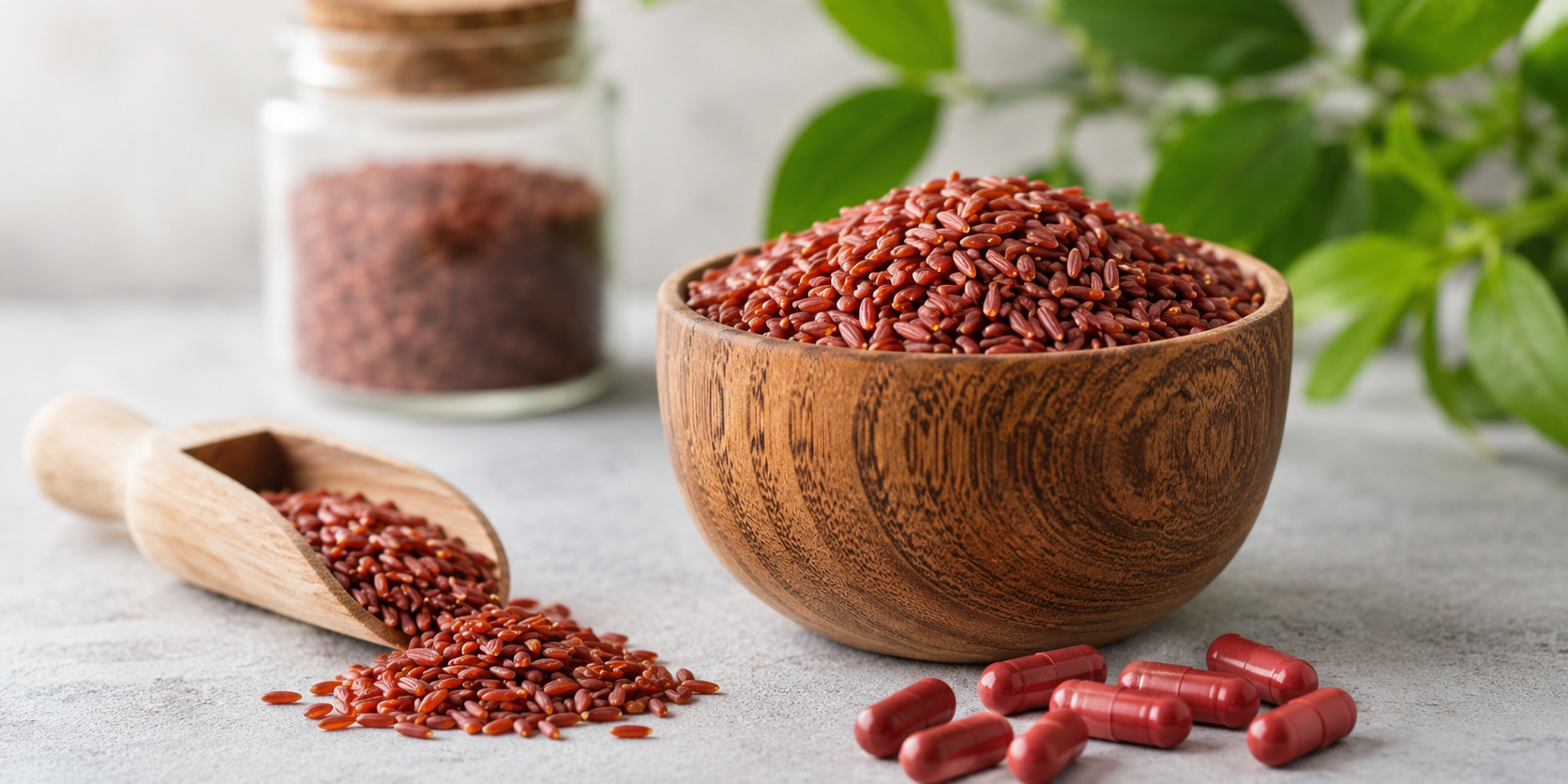
Monacolins from fermented red rice could be banned in food supplements in the European Union. On 13 May 2026, the SCoPAAF approved a European Commission proposal aimed at banning their use.
This is a significant update for manufacturers, distributors and companies in the nutraceutical sector. However, the ban is not yet definitively in force: the European process must continue before the possible publication of the new regulation in the Official Journal of the European Union.
What changes for supplements containing red yeast rice monacolins?
During the SCoPAAF meeting of 13 May 2026, a proposal was approved to ban the use of monacolins from fermented red rice in food supplements.
According to the information reported in the reference documentation, the proposal provides for a 12-month transitional period. The process, however, is not yet concluded and will have to go through the subsequent steps required at European level.
Why is there talk of a ban on monacolins?
Monacolins have long been the subject of particular regulatory attention.
Regulation (EU) 2022/860 had already introduced specific restrictions, establishing that single portions intended for daily consumption should provide less than 3 mg of monacolins from fermented red rice, in addition to specific warnings and information requirements.
The new proposal would represent a much more significant change, potentially leading to a ban on their use in food supplements.
Is the ban on monacolins already in force?
No. The approval of the proposal by SCoPAAF represents one stage of the regulatory process and does not mean the ban is immediately in force.
The proposal will have to go through the required steps, including the scrutiny procedure of the European Parliament and the Council.
Only after the process is completed and the regulation is possibly published in the Official Journal of the European Union (OJEU) will it be possible to know with certainty the final provisions and the related timescales.
How long will the transitional period last?
The proposal provides for a 12-month transitional period.
This period would not start from the vote of 13 May 2026, but from the entry into force of the possible final regulation.
The actual timescales will therefore have to be assessed on the basis of the final text. The management of the shelf life of products already on the market is also a relevant aspect for the companies involved.
What should companies with red rice-based supplements do?
At this stage, it is important neither to consider the ban already applicable, nor to underestimate the possible impact of the proposal.
Companies should start checking:
- products containing monacolins and their formulations;
- the quantity of monacolins present;
- stock and shelf life;
- planned supplies;
- technical and regulatory documentation;
- possible formulation alternatives.
A preliminary assessment makes it possible to prepare different scenarios ahead of the possible entry into force of the new provisions.
Is it necessary to reformulate products immediately?
Based on the approval of the proposal alone, there is no immediate, generalised obligation to reformulate.
However, assessing possible alternatives now can be a strategic move. Reformulation may require the selection of new ingredients, technical checks, documentation updates, and changes to packaging and labelling.
Preparing in advance can therefore reduce the risk of having to manage complex changes within a limited timeframe.
Why is it important to monitor regulatory developments?
The possible ban on monacolins from fermented red rice shows how a regulatory change can affect the entire life cycle of a supplement: from formulation to supplies, through to stock, labelling and business strategy.
Are you considering developing a supplement to support lipid metabolism and cardiovascular wellness?
Gruppo Farmaimpresa supports companies and brands in defining new formulations, selecting alternative ingredients and assessing regulatory aspects. You can also browse our catalogue of ready-to-market products.
Contact us to develop a solution in line with your project or to find out about the references already available.
FAQ on monacolins from fermented red rice
Are monacolins from fermented red rice already banned?
No. On 13 May 2026 a ban proposal was approved, but the European process has not yet been concluded.
What does the current legislation on monacolins provide for?
The current rules require the daily portion to contain less than 3 mg of monacolins from fermented red rice, in addition to specific information requirements and warnings.
How long will the transitional period last?
The proposal provides for a 12-month transitional period, linked to the entry into force of the possible final regulation.
Do companies have to reformulate their supplements immediately?
No, the approval of the proposal does not determine an immediate obligation to reformulate. However, it is advisable to start assessing the impact and possible alternatives.
What should companies check?
It is advisable to check formulations, quantity of monacolins, stock, shelf life, supplies, regulatory documentation and possible formulation alternatives.