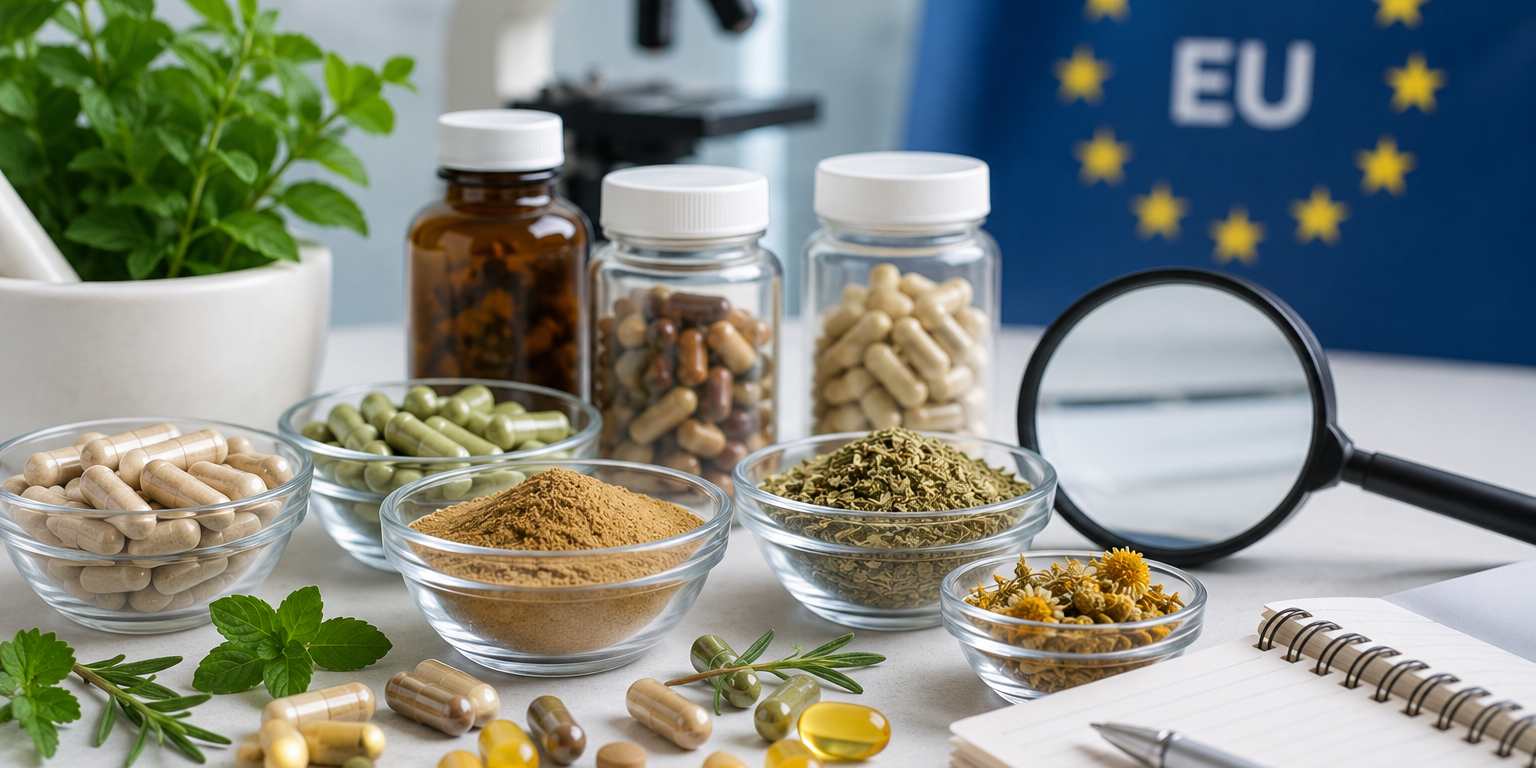
The substances under evaluation in food supplements are at the center of several European procedures. Fermented red yeast rice monacolins, berberine, hydroxycitric acid, hydroxyanthracene derivatives, alpha-lipoic acid and green tea catechins are subject to scientific assessments, regulatory procedures or possible new measures.
For nutraceutical companies, monitoring these dossiers is essential: a safety assessment can lead to restrictions, monitoring or bans, with consequences for formulations, sourcing and marketing.
Which substances in food supplements could be affected by new EU restrictions?
How does the Article 8 procedure work?
Article 8 of Regulation (EC) No 1925/2006 governs the procedure applicable when a substance other than vitamins and minerals, added to food, may pose a potential risk. At the end of the process, a substance may be included in Annex III and made subject to a ban, restrictions or monitoring.
Red yeast rice monacolins: towards a possible ban
The fermented red yeast rice monacolins represent one of the most advanced dossiers. After the restrictions already introduced at European level, in 2026 the process saw new developments towards a possible ban in food supplements.
Companies concerned should monitor the procedure and assess in advance its impact on formulations, stock, shelf life and business strategies.
Berberine and hydroxycitric acid under evaluation
In 2026, EFSA assessed plant preparations containing berberine. The scientific conclusions may form the basis for subsequent European decisions, but an EFSA assessment does not automatically equate to a restriction or a ban.
Preparations containing hydroxycitric acid (HCA) are also under observation for safety aspects, including possible genotoxicity issues and adverse reactions associated with products containing Garcinia gummi-gutta.
Alpha-lipoic acid, hydroxyanthracene derivatives and EGCG
Alpha-lipoic acid (ALA) is also subject to regulatory attention. Among the options being considered is a monitoring period to gather further data before a final decision.
The situation regarding hydroxyanthracene derivatives (HADs) remains complex and involves certain botanical preparations, while for green tea catechins, particularly EGCG, attention mainly concerns potential risks to liver safety.
These cases show that substances already in use or regulated can be subject to new assessments.
Which other substances could enter the procedure?
A request has been made to evaluate a possible initiation of the Article 8 procedure for other substances and preparations, including Withania somnifera, curcumin, piperine, p-synephrine, Hypericum perforatum, Tribulus terrestris and tryptophan.
This does not mean that these ingredients are banned. Before any measures are taken, the substances, preparations, plant parts and safety issues to be assessed must be precisely defined.
What should food supplement companies do?
Companies should have precise knowledge of the composition, origin, chemical form, plant part used and scientific documentation of their raw materials.
It is also important to identify the ingredients involved in EFSA assessments or European procedures and to analyze the possible impact on formulations, sourcing, labeling and marketing.
Are you considering developing or reformulating a food supplement containing substances under evaluation at European level?
Gruppo Farmaimpresa supports companies and brands in ingredient selection, regulatory feasibility assessment and the development of alternative formulations. You can also browse our catalog of ready-to-market products, developed to meet a variety of market needs.
Contact us to find the solution best suited to your project or to learn about our existing references.
FAQ on substances under evaluation in food supplements
Which substances are under observation in the EU?
The main ones include red yeast rice monacolins, berberine, hydroxycitric acid, hydroxyanthracene derivatives, alpha-lipoic acid and green tea catechins.
Does an EFSA assessment mean an ingredient will be banned?
No. A scientific assessment can be followed by various regulatory decisions and does not automatically result in a ban.
What is the Article 8 procedure?
It is the European procedure used to assess substances other than vitamins and minerals that could pose a risk to consumers.
Are Withania, curcumin and piperine banned?
No. A request has been made to evaluate the possible initiation of the Article 8 procedure, but this does not equate to a ban.
What should companies do?
Monitor European dossiers, verify raw materials and their related documentation, and assess in advance the impact of possible regulatory changes.