What does the shrinkflation legislation in force from 1 July 2026 provide for?
The rules on shrinkflation were introduced by Article 23 of Law No. 193 of 16 December 2024, through the insertion of Article 15-bis into the Consumer Code.
Not every change in format or reduction in quantity automatically triggers these obligations.
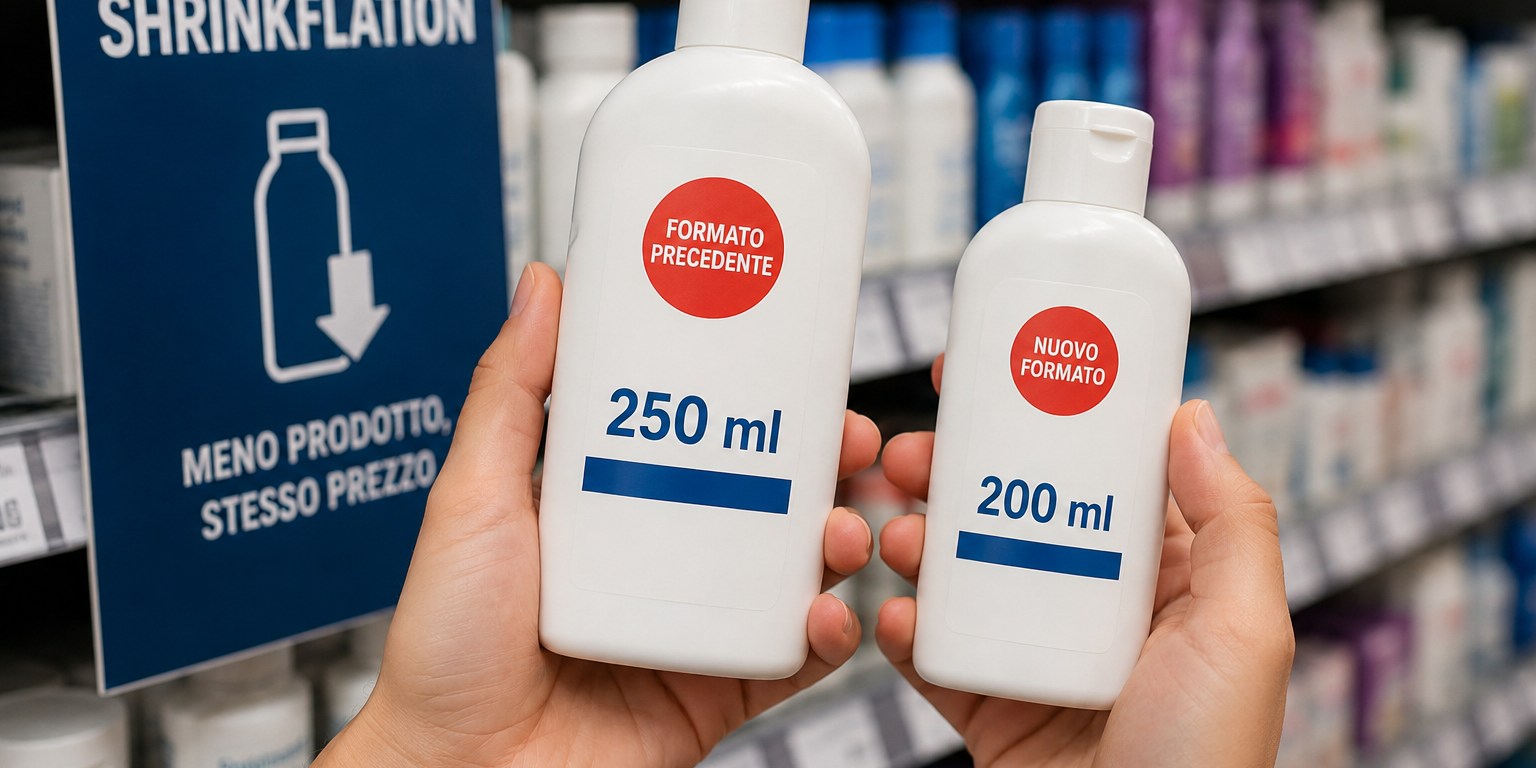
The assessment must take into account the conditions set out in the legislation, including the reduction in nominal quantity, the retention of the previous packaging, and the related increase in the price per unit of measurement attributable to the manufacturer.
What information must be provided to consumers?
The legislation introduces specific obligations to ensure that consumers can identify a reduction in the quantity of a product.
The information must clearly indicate the difference from the previous quantity, in accordance with the applicable legal requirements.
The information obligation must be met for six months from the date on which the product concerned is placed on the market.
Correct implementation therefore requires verifying not only the packaging, but also how the change is communicated to consumers.
Which products are subject to shrinkflation obligations?
The shrinkflation legislation applies to consumer products that fall within the specific conditions identified by the rules.
The issue may affect a number of consumer sectors, including the cosmetics and nutraceutical sectors, where transactions falling within the regulated circumstances are carried out.
A simple reduction in quantity is therefore not, on its own, sufficient to automatically trigger the obligation: the transaction must be assessed as a whole and the legal conditions verified.
What should companies verify today?
Now that the rules are applicable, companies should review any products affected by changes in format or quantity and assess:
- previous and current nominal quantity;
- packaging characteristics;
- change in the price per unit of measurement;
- date the product was placed on the market;
- how the change is communicated;
- documentation relating to the changes made.
This review is particularly important for companies that have introduced, or are planning, changes in format, quantity or packaging.
A prior compliance assessment also makes it possible to properly coordinate Regulatory Affairs, marketing, packaging, production and distribution activities.
Why is it important to verify compliance with the legislation?
Shrinkflation is not merely a commercial or packaging issue. The way in which quantities and packaging are changed may give rise to specific consumer-information obligations.
For this reason, every change should be assessed by considering the nominal quantity, packaging, price per unit of measurement and marketing arrangements together.
The proper management of information intended for consumers also forms part of a broader framework of requirements concerning product labelling and compliance.
Gruppo Farmaimpresa monitors regulatory developments and supports companies in assessing the requirements applicable to the marketing of products.
Have you changed the quantity, format or packaging of a product? Check whether the changes fall within the scope of the shrinkflation rules. Gruppo Farmaimpresa can support your company in analysing the specific case and verifying the applicable requirements.
When did the shrinkflation rules become applicable?
The shrinkflation rules have applied in Italy since 1 July 2026.
Which products fall within the obligations?
The rules apply to the circumstances set out in the legislation where a reduction in nominal quantity, while retaining the previous packaging, results in a related increase in the price per unit of measurement attributable to the manufacturer.
For how long must the information be provided?
The information obligation under the rules must be met for six months from the date on which the product concerned is placed on the market.
Is every reduction in quantity considered shrinkflation?
No. A reduction in quantity does not automatically trigger the application of the legislation. It is necessary to verify whether all the conditions set out in the rules are met.
What should companies verify today?
Companies should check the previous and current quantities, packaging, price per unit of measurement, date the product was placed on the market and the applicable information requirements.