Secol Antireflux heartburn and reflux: clinical study results with the GERD-HRQL questionnaire
Secol Antireflux for reflux and heartburn is intended for those who want practical support for the most common symptoms of gastroesophageal reflux: rising acidity, heartburn, discomfort when lying down, night-time awakenings and, in associated cases, reflux-related cough and bloating.
In the clinical study, symptom trends were assessed with the GERD-HRQL questionnaire, a tool used in clinical research to measure in a structured way how reflux affects quality of life.
Secol Antireflux is presented as an oral gel in a bottle, with a syringe reducer adapter and a dosing syringe, available in 210 ml or 300 ml formats.
The reported data refer to an observational clinical study conducted by Gruppo FarmaImpresa in August 2025, which evaluated the effectiveness of Secol Antireflux in supporting the management of gastroesophageal reflux symptoms and heartburn, measuring its impact on quality of life through a dedicated clinical questionnaire.
What Secol Antireflux is and why it is different from a simple “antacid”
Secol Antireflux is an oral gel based on magnesium alginate and simethicone, designed for people who occasionally experience gastroesophageal reflux-related symptoms and want fast and long-lasting relief.
The concept is a dual-action system:
- Magnesium alginate: helps form a protective barrier on the gastroesophageal mucosa, helping to counter acid regurgitation.
- Simethicone: reduces the surface tension of gas bubbles in gastric contents, promoting their elimination and being useful when reflux is associated with bloating and abdominal distension.
Who is Secol Antireflux indicated for?
Secol Antireflux is indicated as support when reflux and excess acidity cause recurring discomfort, interfering with daily well-being and often with sleep. It is particularly useful when typical reflux symptoms are accompanied by bloating and gas, with a feeling of heaviness and abdominal tension.
Indicated for:
- Gastroesophageal reflux disease
- Reflux esophagitis
- Heartburn
- Reflux-related cough
- Abdominal pain or cramps related to excess acidity and bloating
Clinical study: methodology and results
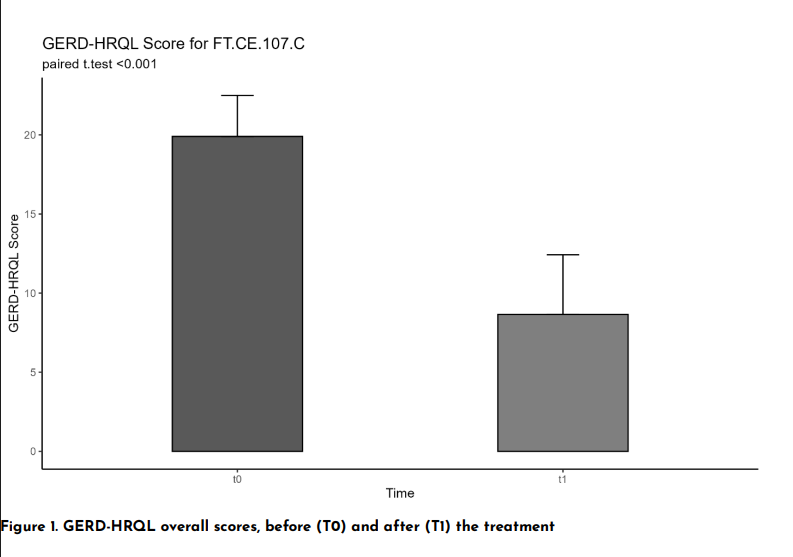
In the observed group, 20 adults were enrolled and symptoms were re-assessed at follow-up after 4 weeks (T1) compared to baseline (T0). During the treatment period, the dosage used was 15 ml per day.
The GERD-HRQL score chart shows a marked reduction between T0 and T1, with a statistically significant difference (p < 0.001): in practical terms, this translates into a noticeable improvement in typical reflux symptoms (such as heartburn and related discomfort) and consequently in quality of life.
A “marketing-ready” number: how much most people improved
The report states that 75% of patients achieved a score reduction of at least 50% and that, with one exception, everyone reduced the score to levels below lower severity thresholds.
Specific symptoms: what really changes in everyday life
Beyond the overall score, the report highlights an important reduction in symptom frequency. In particular, episodes such as night-time awakenings due to heartburn, difficulty swallowing and pain when swallowing are almost completely absent at follow-up (T1). Overall health perception also improves: many subjects move from dissatisfaction to a satisfied or neutral evaluation, indicating a positive impact on quality of life.
Looking for a solution ready for B2B distribution or private label?
We are certified manufacturers of medical devices, dietary supplements, and cosmetics. Secol Antireflux is ready for market launch or for private labeling, with full regulatory and clinical support.