
Red clover isoflavones: a scientific analysis
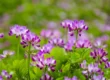
Red clover (Trifolium pratense L.) is a perennial herbaceous plant belonging to the Fabaceae family, widespread throughout Italy. It grows spontaneously in meadows and pastures and is harvested between May and October. Recognizable by its characteristic whitish “V” shaped spot on the leaves and reddish-purple flowers, this plant has long been the subject of studies for its physiological effects.
The Ministry of Health, in the Decree of March 27, 2014, authorized the use of red clover in food supplements, allowing the use of the flowers and aerial parts. However, only the flowers of red clover can be used for the health claims provided by the ministerial guidelines, such as “Counteracting menopausal disorders,” “Physiological skin function,” “Purifying functions of the body,” and “Functionality of the upper respiratory tract.”
Traditionally, red clover has been used to treat coughs, asthma, bronchitis, psoriasis, and eczema. Its estrogenic activity, which justifies the claim for menopausal disorders, is linked to its high content of isoflavones, molecules such as genistein, daidzein, biochanin A, and formononetin.
Red clover isoflavones: a scientific analysis
Several studies have analyzed the distribution and concentration of isoflavones in different parts of the plant, leading to surprising results.
Distribution of isoflavones: a comparison
A study conducted in Illinois (2) compared the concentration of isoflavones in the subterranean organs (leaves, stems, petioles) with that found in the flower heads. The analyses showed that the concentration of isoflavones was generally higher in the aerial parts than in the flowers. The estrogenic activity, measured in vitro, was also found to be more marked for extracts of the aerial parts.
Isoflavone content in different growth stages
Another Canadian study (1) analyzed the isoflavone profile in 13 different red clover cultivars, harvested at two distinct maturation stages. The analyses confirmed that the largest quantity of isoflavones, particularly formononetin and biochanin A, is found in the leaves.
The flowers, on the other hand, are the part of the plant with the lowest total isoflavone content. These results are in line with those of a previous study (3), which showed that the leaves contain on average a higher concentration of isoflavones (11.97 mg/g on dry extract) compared to stems (4.9 mg/g) and inflorescences (3.3 mg/g).
Implications and future prospects of red clover
These scientific studies highlight a discrepancy between scientific evidence and current Italian ministerial regulations. Although research shows that the aerial parts of red clover have a higher isoflavone content than the flowers, the physiological effect on menopausal disorders is currently recognized only for the latter.
While awaiting a decision from the European Commission regarding the physiological functions of plants in food, a request has been made to the Ministry of Health to align the authorized claims with the part of the plant that, according to science, contains the highest quantity of isoflavones.
If you’re interested in creating or manufacturing a product for menopause:
References:
R., Tsao, et al. Isoflavone Profiles of Red Clovers and Their Distribution in Different Parts Harvested at Different Growing Stages. J Agric Food Chem 2006; 54: 5797-5805.
N.L., Booth, et al. Seasonal variation of red clover (Trifolium pratense L., Fabaceae) isoflavones and estrogenic activity. J Agric Food Chem 2006; 54: 1277-1282.
E., Sivesind, P., Seguin. Effects of the Environment, Cultivar, Maturity, and Preservation Method on Red Clover Isoflavone Concentration. J Agric Food Chem 2005; 53: 6397-6402.
Your strategic partner for the development and production of nutraceutical and cosmetic solutions.
We offer comprehensive Contract Development and Manufacturing (CDMO and third-party manufacturing) services for the ideation, production, and commercialization of:
-
Food supplements
-
Medical devices based on substances
-
Dermocosmetics