Probiotici nell’esofago di Barrett: Potenziali benefici nella prevenzione e trattamento dell’adenocarcinoma esofageo
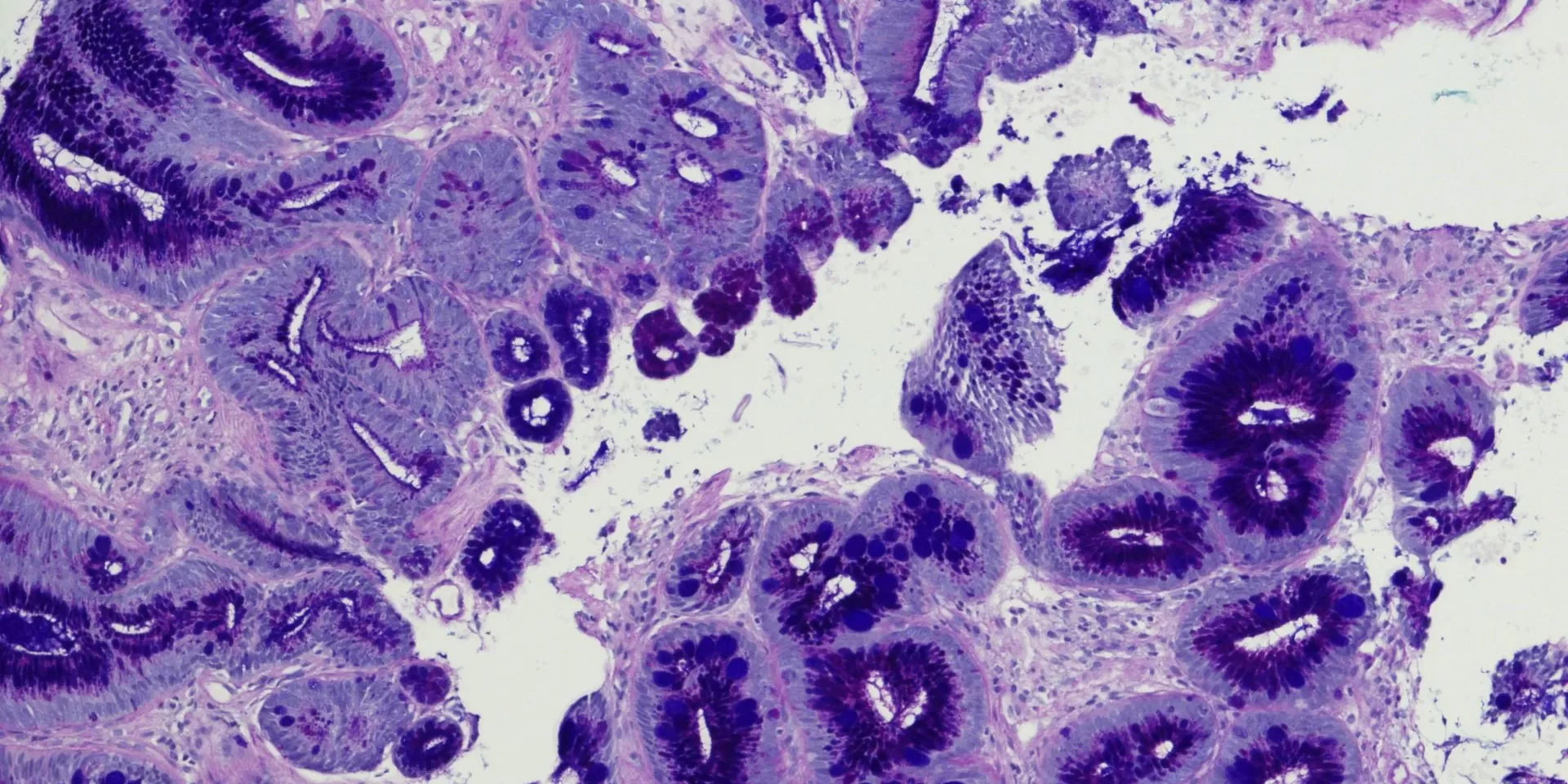
If underestimated, gastroesophageal reflux can induce Barrett’s esophagus, a complex precancerous condition characterized by metaplasia at the gastroesophageal junction, where the normal squamous epithelium is altered (columnar epithelium) and can lead to the development of esophageal adenocarcinoma.
The molecular pathogenesis of the disease is not yet fully clarified, but a series of experimental data has shown that the administration of specific probiotics can have positive effects.
This study was conducted to evaluate the inhibitory effect of probiotics on the expression of specific markers in an in vitro model. Two different Barrett’s esophagus cell lines were selected for co-culture with B. longum and Lactobacillus acidophilus to measure the gene expression of CDX1 (caudal type homeobox 1) and IL-18, TNFα, p53 (tumor suppressor), and cyclooxygenase 2.
The results were also examined in terms of prophylactic and therapeutic effects. The effects were evaluated on pre-neoplastic cell lines of Barrett’s esophagus characterized by non-dysplastic metaplasia (CP-A) and on cell lines with high-grade dysplasia (CP-D), practically the stage preceding adenocarcinoma. The results (at 3 hours) obtained on CP-A cell lines showed that these microorganisms can interfere with the considered biomarkers in terms almost always statistically significant: P53 (p=0.035 for B. longum and p=0.032 for L. acidophilus), IL-18 (p=0.014 and p<0.001), TNFα (p<0.0001 and p=0.107), CDX1 (p<0.0001 for both), and COX2 (p<0.05 and p<0.0001). In co-cultures with CP-D cells, the results were still almost always significant: P53 (p=0.037 for B. longum and p=0.063 for L. acidophilus), IL-18 (p<0.01 for both), TNFα (p<0.01 and p<0.0001), CDX1 (p<0.0001 for both), and COX2 (p<0.001 and p<0.01).
Greater efficacy was observed in therapeutic tests compared to prophylactic ones. According to the authors, the results obtained indicate that probiotic treatment has potential in preventing Barrett’s esophagus and its degeneration into adenocarcinoma.
Se la tua azienda vuole sviluppare e/o realizzare un prodotto per la prevenzione dell’esofago di Barret
Source: Department of Microbiology of Pathobiology, School of Public Health, Tehran University of Medical Sciences, International Campus (TUMS-IC), Tehran, Iran. Mozaffari namin B, Daryani NE, Mirshafiey A, Yazdi MK, Dallal MM. Effect of probiotics on the expression of barrett’s oesophagus biomarkers. J Med Microbiol 2015, Apr;64(Pt 4):348-54