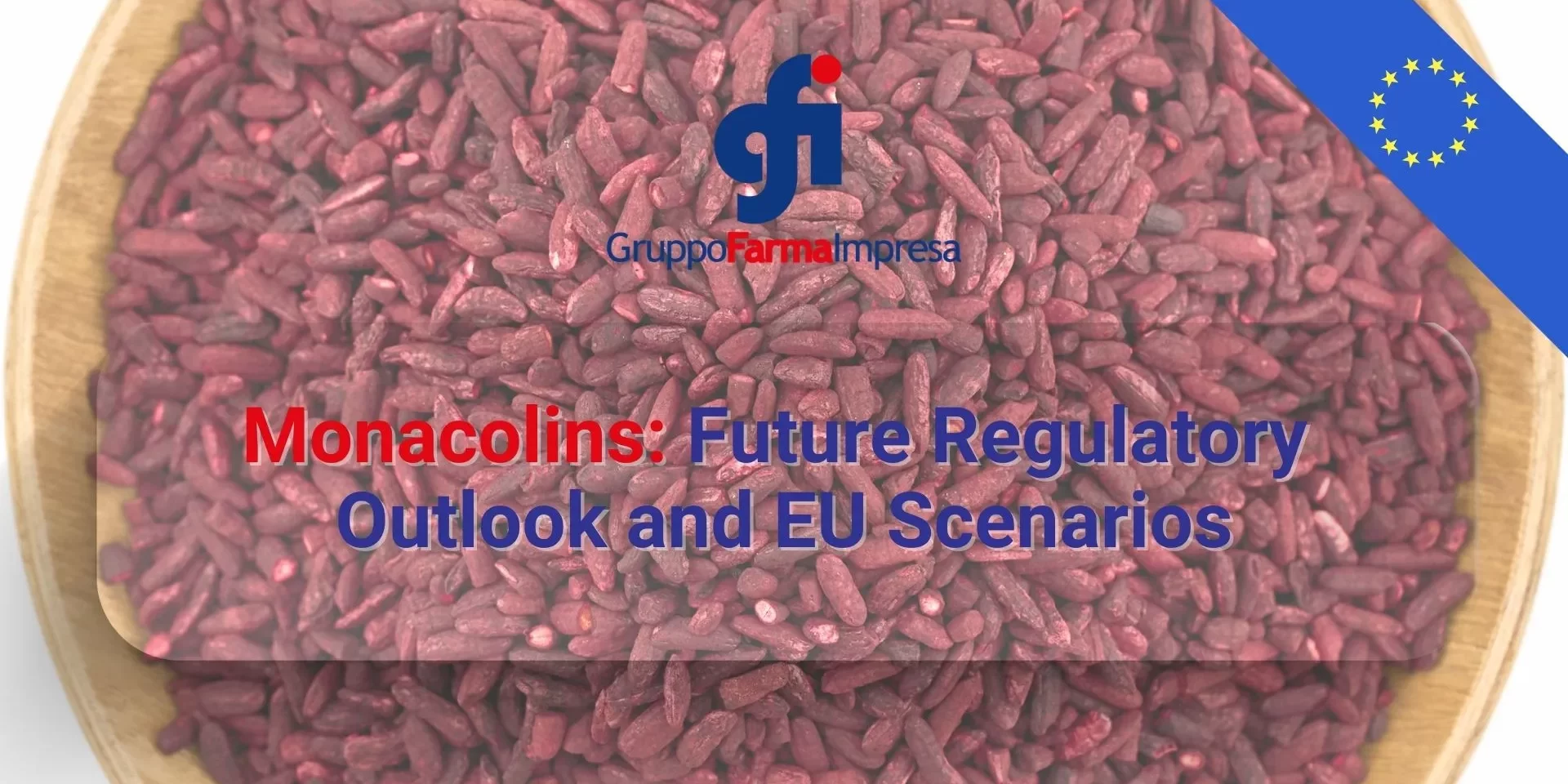
Red yeast rice monacolins are once again at the center of the European regulatory debate. In recent months, companies, formulators, and operators in the nutraceutical sector have been seeking clear answers about the future of these widely used substances in food supplements for cholesterol control.
As of today, official information remains limited. However, indications emerging at EU level outline a scenario that deserves maximum attention from industry stakeholders.
Understanding in advance the regulatory evolution of red yeast rice monacolins means being able to properly plan portfolio strategies, product development, and market positioning.
Red Yeast Rice Monacolins: EU Regulatory Update
Possible Ban and Transitional Period
According to currently available information, the European Commission appears to be leaning toward a total ban on the use of red yeast rice monacolins in food supplements.
The proposal could be presented at the next meeting of the SCoPAFF, with one key open issue: the duration of the transitional period, hypothesized between 6 and 12 months.
SCoPAFF (Standing Committee on Plants, Animals, Food and Feed) is the permanent committee of the European Commission that supports decisions on food safety, feed, supplements, and ingredients.
It is the body where Member States and the EU Commission discuss, vote, and guide regulatory measures that may lead to restrictions or bans on substances used in food and food supplements.
Some Member States, including Germany, have reportedly already expressed opposition to a longer transitional period, pushing for a more restrictive solution.
Approval Process and Expected Timelines
It is unlikely that the proposal will be adopted immediately. More plausibly, it will be followed by an online consultation phase among Member States.
If approved, the text would then move to the European Parliament and the EU Council, initiating the co-decision procedure.
Should the process move forward without delays, publication of the measure could occur as early as June, in line with the deadlines set by Regulation (EU) 2022/860.
Concrete Impacts for Companies
Transitional timelines represent a key element for companies:
- Transitional period of 6 months: marketing possible until the end of 2026
- Transitional period of 12 months: sales permitted until June 2027
This makes a timely evaluation of product portfolios containing red yeast rice monacolins essential, both in terms of existing stock and reformulation strategies.
Regulatory Contradictions and Public Health
One aspect raising considerable concern is the contradiction between a potential ban and European cardiovascular prevention policies.
Red yeast rice monacolins are among the few ingredients for which EFSA has recognized an effect on maintaining normal blood cholesterol levels.
Removing this option could have repercussions on public health, reducing available preventive alternatives, especially for individuals who do not resort to pharmacological therapies.
Legal Precedents and Room for Intervention
Despite the restrictive scenario, there are still margins for intervention.
Some pending appeals before the Court of Justice of the European Union, related to previous regulations on similar substances, could influence the final outcome of the measure.
This context makes a structured regulatory approach even more strategic, based on up-to-date expertise and a medium- to long-term vision.
Related Insights
On farmaimpresa.com, in-depth articles are available analyzing:
- History and Safety of Fermented Red Yeast Rice Monacolins – A review of safety data, traditional use of fermented red yeast rice, and the available scientific evidence.
- Previous EFSA Opinion on Monacolins – The article outlines the 2018 EFSA opinion on the safety and risk profile of monacolins included in fermented red yeast rice-based products.
- New EU Rules for Food Supplements: Restrictive Proposals – Regulatory analysis of proposed restrictions and potential bans on red yeast rice monacolins within the framework of the new EU supplement regulations.
We are manufacturers of medical devices, food supplements, and cosmetics.
We support our partners not only in production, but also through in-house regulatory know-how that enables us to assist each project from the initial idea to commercialization.
Contact us if you want to develop a compliant product, sustainable over time, or if you wish to become our distributor.