
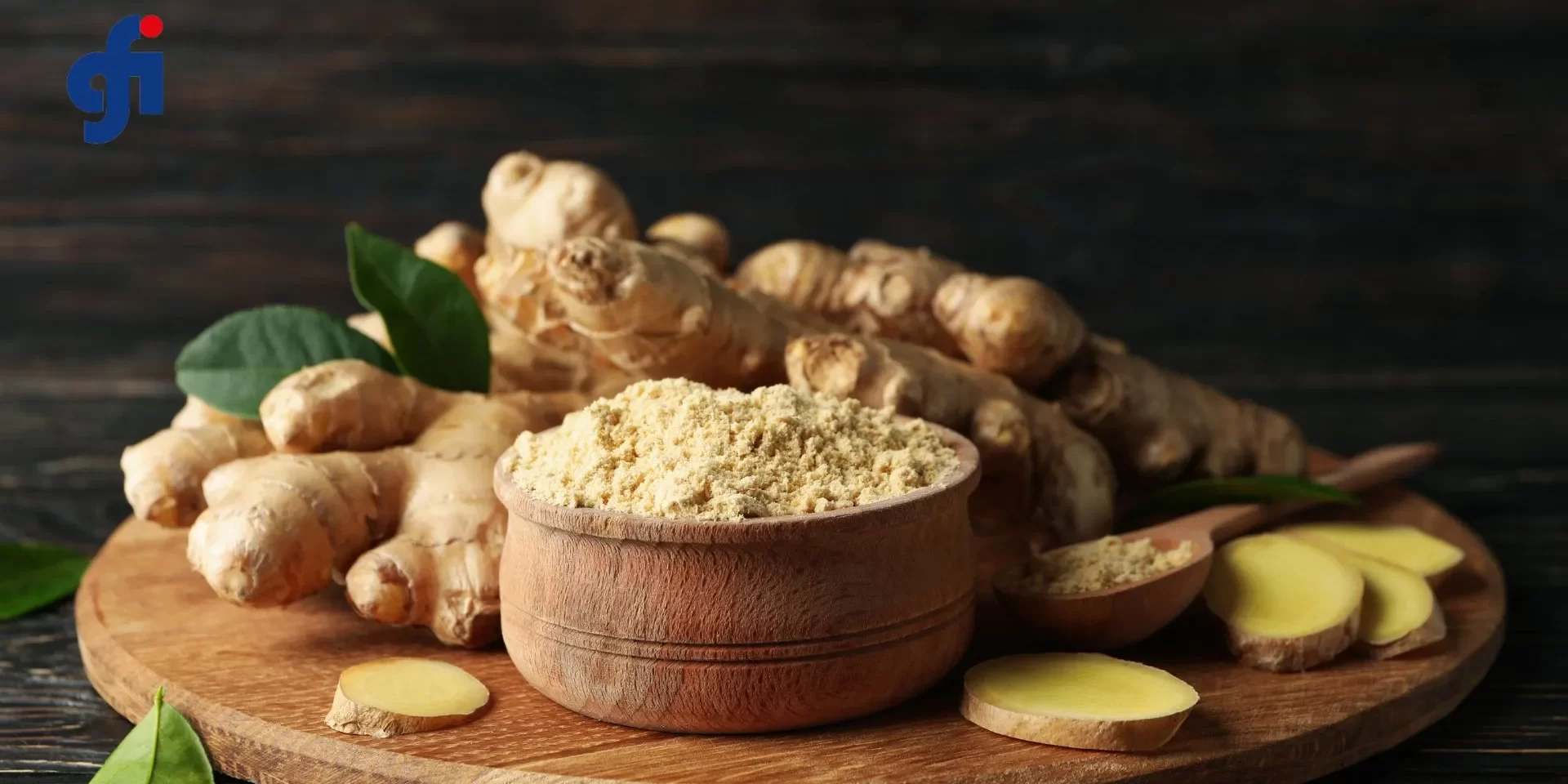
The Benefits of Ginger for Functional Dyspepsia: The Study
Functional dyspepsia is one of the most widespread gastrointestinal disorders globally, affecting over 20% of the population. Characterized by symptoms such as postprandial fullness, early satiety, epigastric pain, and burning, this condition typically occurs at least three days a week for three consecutive months.
While the causes are multifactorial and may include infections, overweight, smoking, and psychological stress, treatment remains complex. Conventional medications often prove ineffective in addressing this issue.
In this context, natural remedies like ginger are gaining increasing interest for the treatment of functional dyspepsia. Long used in traditional Chinese and Indian medicine to alleviate digestive disorders, this plant has been the subject of a recent clinical study with promising results.
The Study on Ginger’s Efficacy
The research, conducted at the University of Debrecen in Hungary, involved 51 patients with functional dyspepsia.
Participants took two capsules per day containing 540 mg of ginger root extract (equivalent to 1.35 g of fresh root standardized to a minimum of 4% volatile oils) half an hour before main meals for a period of 4 weeks.
During the treatment, subjects maintained their regular eating habits without taking prokinetic or antisecretory supplements.
Study Results
The study reported a significant improvement in symptoms in 63.7% of participants.
Notably, analysis of the primary symptoms showed a decrease in postprandial fullness (-20%) and early satiety (-30%). A marked improvement was also observed in symptoms related to epigastric pain (-44%) and nausea (-43%). There were minor but still significant improvements in symptoms related to heartburn (-12%).
These benefits were primarily attributed to ginger’s active compounds, such as gingerols (6-gingerol, 8-gingerol, 10-gingerol) and 6-shogaol, which modulate M3 cholinergic and 5-HT3/HT4 serotonergic receptors involved in regulating gastrointestinal motility.
Future Prospects
Despite the promising results, the study has some limitations. Firstly, the number of participants was relatively small, which may not fully represent the variety of cases found in the general population.
Additionally, the treatment duration, limited to just four weeks, leaves open the question of potential long-term effects.
These factors highlight the clear need for further research, ideally conducted with larger samples and double-blind methodologies. Validation with a larger sample would allow more accurate estimates of optimal dosage and treatment duration for ginger use.
Conclusion
Despite the promising results, the study has some limitations. Firstly, the number of participants was relatively small, which may not fully represent the variety of cases found in the general population.
Additionally, the treatment duration, limited to just four weeks, leaves open the question of potential long-term effects.
These factors highlight the clear need for further research, ideally conducted with larger samples and double-blind methodologies. Validation with a larger sample would allow more accurate estimates of optimal dosage and treatment duration for ginger use.
If your company is interested in developing or manufacturing a product targeting the symptoms of functional dyspepsia
Source: september 2023, “The Effect of Ginger Supplementation on the Improvement of Dyspeptic Symptoms in Patients With Functional Dyspepsia”, PubMed Central