
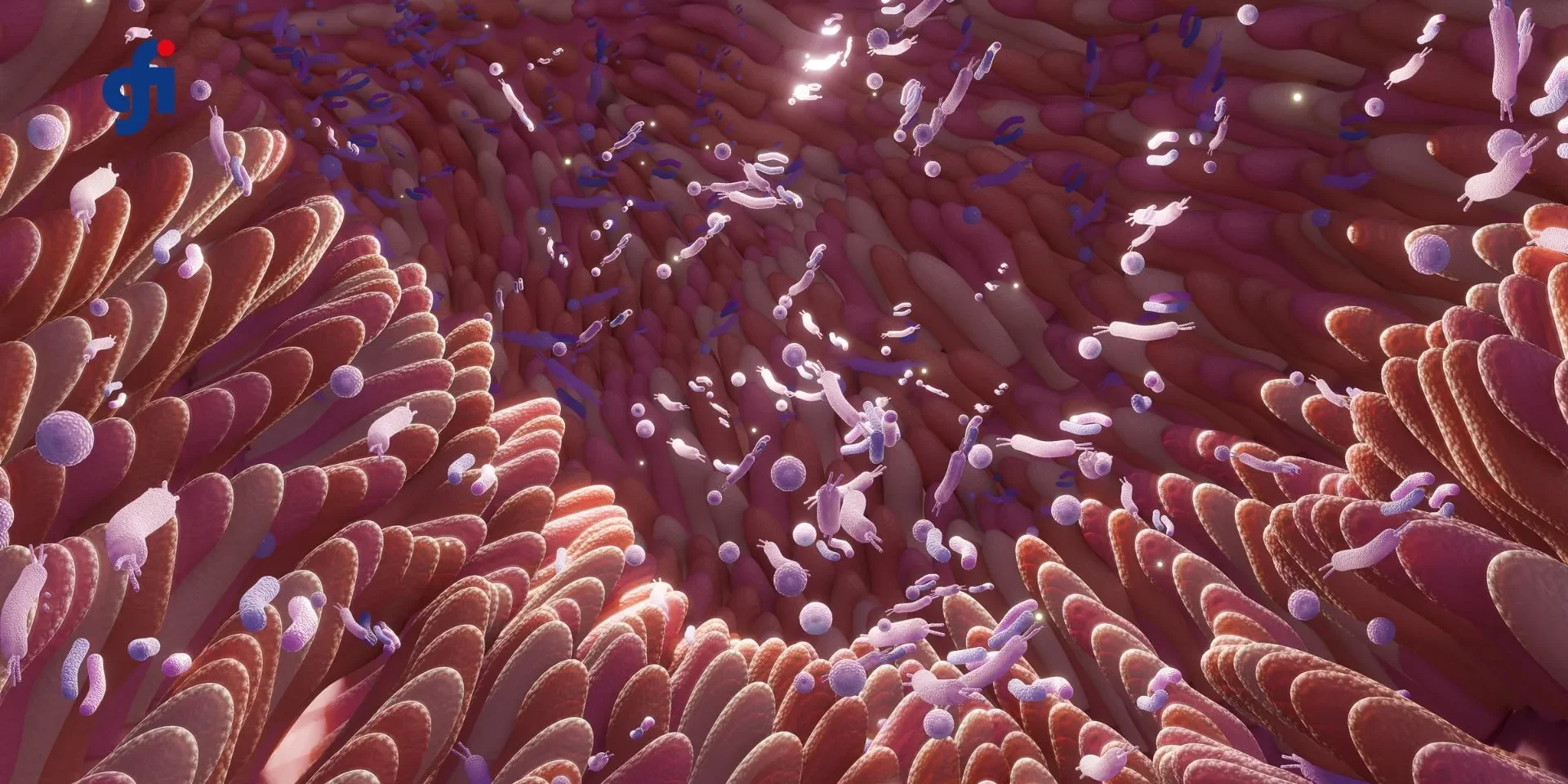
Why the microbiota depends on what we cannot see
Bacterial biofilm is a highly organized biological structure composed of microorganisms that live aggregated and adherent to a surface. What makes it particularly effective is the production of a protective extracellular matrix, mainly composed of polysaccharides, which envelops bacteria like a barrier. This matrix can represent up to 90% of the total mass of the biofilm, giving it a remarkable ability to resist external agents.
Unlike free-living bacteria, those embedded in a biofilm are able to adapt more effectively to the surrounding environment, creating a stable micro-ecosystem that promotes their survival and long-term persistence, ensuring good intestinal well-being.
The role of biofilm in chronic infections
One of the most critical aspects of biofilm is its involvement in the chronicization of infections. The protective matrix hinders the action of the immune system and limits the penetration of antibiotics, drastically reducing their effectiveness. This explains why many infections tend not to resolve completely or recur after apparent improvement.
Scientific evidence suggests that approximately 80% of persistent bacterial infections are associated with the presence of microorganisms organized in biofilms, making this structure a key factor in treatment difficulty.
The biological functions that make biofilm so effective
Biofilm is not a simple random aggregation, but a dynamic and functional system. Within it, water and nutrients are retained, allowing bacteria to maintain homeostatic conditions even in hostile environments. The structure also protects microorganisms from environmental stressors such as dehydration, temperature variations, and changes in osmotic pressure.
The close proximity between bacteria favors intercellular communication and the transfer of genetic material, accelerating adaptation processes and increasing the overall resistance of the microbial community.
Where biofilm hides and why it creates clinical problems
Biofilms are involved in numerous infections affecting different body districts, including the mouth, lungs, urinary tract, skin, and cardiovascular system. They also easily form on medical devices such as catheters, joint prostheses, artificial heart valves, and contact lenses, representing one of the main complications in clinical settings.
An extremely common example is dental plaque, a well-known form of biofilm due to its resistance and its role in the development of cavities and gum diseases.
Biofilm as a key factor in intestinal imbalances
In the intestinal tract, biofilm plays a particularly delicate role. The gut hosts a complex microbial ecosystem, essential for digestion, immune system modulation, and inflammation control. When pathogenic bacteria, fungi, or parasites manage to organize into biofilms along the intestinal mucosa, they can profoundly alter the intestinal microbiota.
This condition promotes chronic inflammation, increased intestinal permeability, and the release of toxins into the bloodstream, contributing to the development of persistent digestive disorders and food hypersensitivities that are often difficult to diagnose.
Why traditional treatments are often not enough
An approach focused exclusively on eliminating pathogenic microorganisms is often incomplete. Even when pathogens are reduced, the microbiota may become impoverished, creating favorable conditions for new colonizations. The main issue remains the ability of pathogens to hide within the biofilm, making them less recognizable and more resistant.
Without targeting this protective structure, the risk of recurrence remains high and recovery is only temporary.
Natural strategies to weaken biofilm
Research has shown that certain natural substances can interfere with biofilm stability and promote its gradual disruption. Among the most studied are plant-derived compounds such as turmeric, oregano, garlic, and berberine, known for their antimicrobial and modulatory properties. Apple cider vinegar, thanks to its acidic component, can help create an unfavorable environment for biofilms, while activated charcoal helps absorb toxins released by microorganisms.
Understanding the role of bacterial biofilm makes it possible to adopt a more comprehensive view of intestinal health and chronic infections, focusing not only on eliminating pathogens but also on restoring microbiota balance.
If your company wishes to create or manufacture a product for intestinal well-being:
Fonte: Source: López D., Biofilms, Cold Spring Harbor Perspectives in Biology